Guatemala
S.T.A.B.L.E. Program – Guatemala
By Jill Bauer, Lead Instructor
Minneapolis, Minnesota
S.T.A.B.L.E. Class Date(s): March 1-2, 2010
Barcelo Hotel in Guatemala City, Guatemala.
Hosted by Roosevelt Hospital and Abbott Laboratories in Guatemala.

TEACHING TEAM
Jill Bauer, BSN, RN, Neonatal Outreach Nurse, S.T.A.B.L.E. Lead Instructor
Stephanie Damlo, BSN, RN
April Weston, RN
Children’s Hospitals and Clinics of Minnesota
Minneapolis, MN
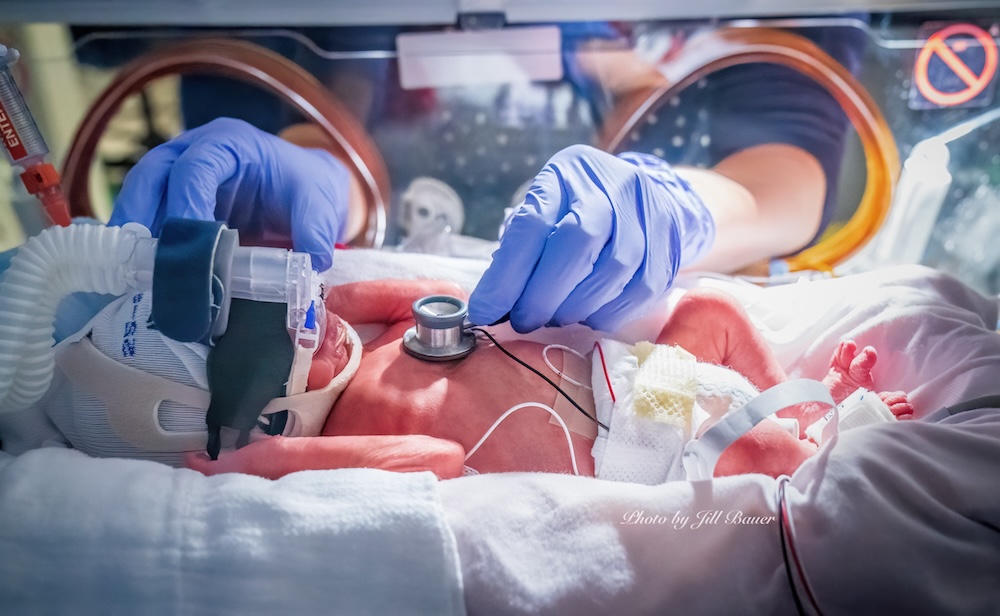
April and Stephanie demonstrate how to respond to apnea and bradycardia spells with hands-on skill practice.
ABOUT THIS MISSION TRIP
In March 2010, several nurses from Children’s Hospitals and Clinics of Minnesota in St. Paul and Minneapolis campuses traveled to Guatemala on behalf of the Baby’s Breathe Project, located in Minneapolis, Minnesota; and the Children’s Hospitals and Clinics of Minnesota. Baby’s Breathe Project is the non-profit start up of two NICU nurses, Meg Dornfeld and Terri Tjaden, from Children’s Hospitals and Clinics of Minnesota. While vacationing in Guatemala several years ago, they decided to reach out to a hospital to see if they could do anything to progress the education and care of neonates while they were in the country. They contacted a Neonatologist from Roosevelt Hospital in Guatemala City and that relationship began the efforts to improve the education of nurses and outcomes of infants in that region, which is now three years in the making. Our S.T.A.B.L.E. Instructor teaching team has taught the S.T.A.B.L.E. Program for the past two years in Guatemala, which has been extremely well-received and popular!
Guatemala City sits in the central region of Guatemala. The climate is very tropical, warm and humid. Our teaching began at Roosevelt Hospital, the tertiary NICU of that area which cares for approximately 85 NICU patients per day. The lowest gestational age that they care for is 28 weeks. Equipment in the unit includes ventilators, oscillators, isolettes, CPAP machines, IV pumps, UV/UA lines, etc. However, shortages of equipment, in relation to the numbers of babies, often limits which infants can be monitored and supported with the equipment. Usually 1 or 2 neonatologists staff the unit along with several nurses. Medical students also provide a very vital role in caring for patients in the NICU. In addition to these caregivers, there are also designated lactation consultants which provide important education and assistance to mothers. Kangaroo care is highly encouraged as well, with both mothers and staff participating.
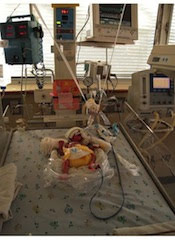
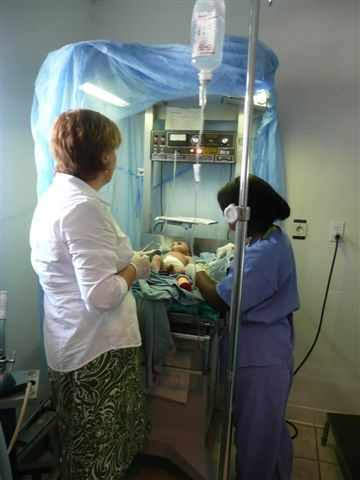
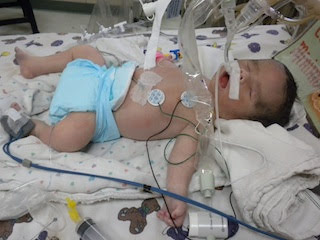
A tiny infant in the NICU at Roosevelt Hospital.

One of the rooms in the NICU at Roosevelt Hospital.
The nurses love and appreciate the education very much, as options for advancing knowledge are limited. They also enjoy doing simulations which allow them to participate in actual hands-on activities, incorporating the principles taught in the classroom. After one class was completed, a physician told us that some of the nurses were enthusiastically practicing interpretation of blood gases on patients in the NICU and incorporating principles of infection prevention. The course had sparked a curiosity and enthusiasm in them that he was very exciting to see!
In 2009, we had approximately 100 nurses and 10 medical students or residents from 2 hospitals attend the S.T.A.B.L.E. Course. In 2010, we had 190 nurses and approximately 15 medical students/MDs from 26 hospitals in attendance.
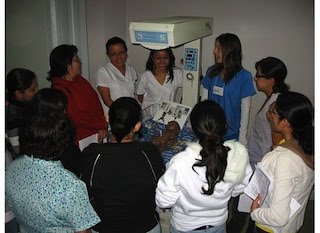
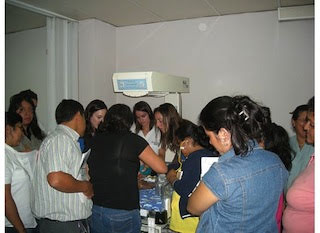
The Guatemalan nurses really enjoyed being able to practice hands-on skills with April.

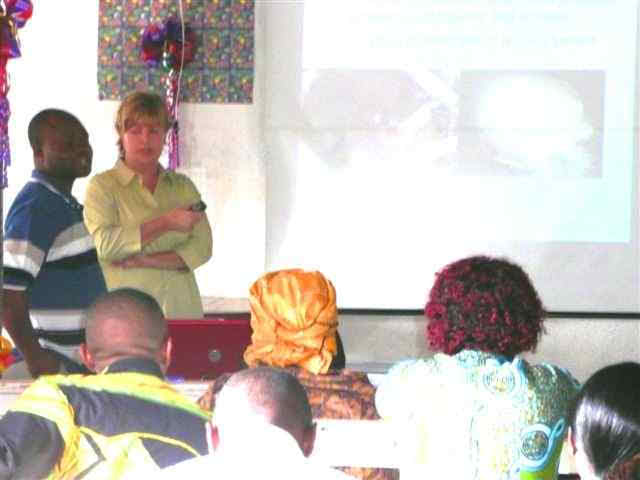
Jill teaching a small group of nurses how to calculate lab results. A medical student assisted with interpretation.
Shown below are some of the comments made by students who attended the S.T.A.B.L.E. course.
“In 17 years of seeking education in Guatemala, you taught me more in 2 days than I have learned in all these years! Thank you so much! Please come back again.”
“The training was excellent, the practice was very good. I learned very elementary and basic things that if you act immediately, can save the life of patients. If possible, we would like these skills more frequently. Thank you very much, I learned alot.”
“Thank you for the course, it was very good. I hope that it will continue and we wait for you next year”
“Thank you for all of the knowledge, we hope to see you again. Thank you, thank you to all.”
“Thank you for expanding my knowledge and taking into account these activities which helped my professional competency. God bless.”
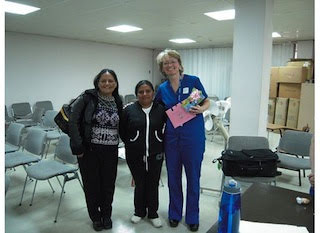
After learning the S.T.A.B.L.E. Program, 2 nurses returned the next morning with a thank you gift to express their gratitude.
Guatemala is in great need of resources for education that are written or recorded in Spanish. They also have a need for items such as Ambu bags, oximeters and cardiac monitors along with any and all types of NICU supplies (tape, duoderm, breast pumping equipment, stethoscopes, blood pressure machines, etc.)
For additional information on how you can help, you may contact the Instructor directly though this link. Contact the Instructor
MATERIALS DONATED FROM THE S.T.A.B.L.E. PROGRAM: 5 Spanish CD-ROM Slide Programs that were given to key educators/physicians in the hospitals who attended in Guatemala City.
1 Cardiac Student Handbook, which was given to a local pediatrician who desires to become a pediatric cardiologist.
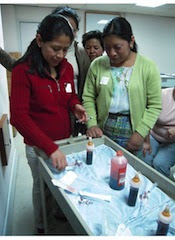
Skill practice drawing from a simulated umbilical line.
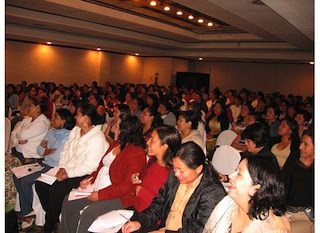
200 nurses from 26 Guatemalan hospitals showed up at a hotel in Guatemala City where we presented the S.T.A.B.L.E. Program and other infant care teaching.

Guatemalan nurses practice hands on skill of bagging an infant.
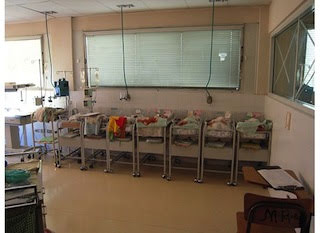
Nursery where infants with neurologic issues are managed.
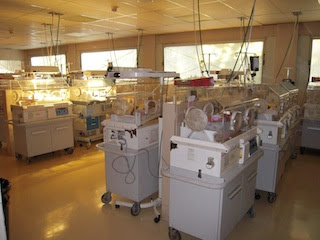
NICU at Roosevelt Hospital where they care for about 85 infants each day.
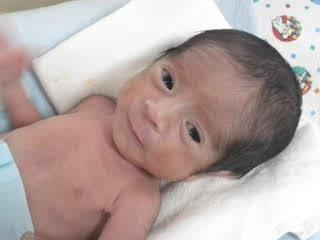
A Beautiful Guatemalan baby in the NICU.
After helping one of the mothers on the OB unit whose baby was in the NICU, she named her baby after me! A very touching moment! Meet little baby Jill!!!